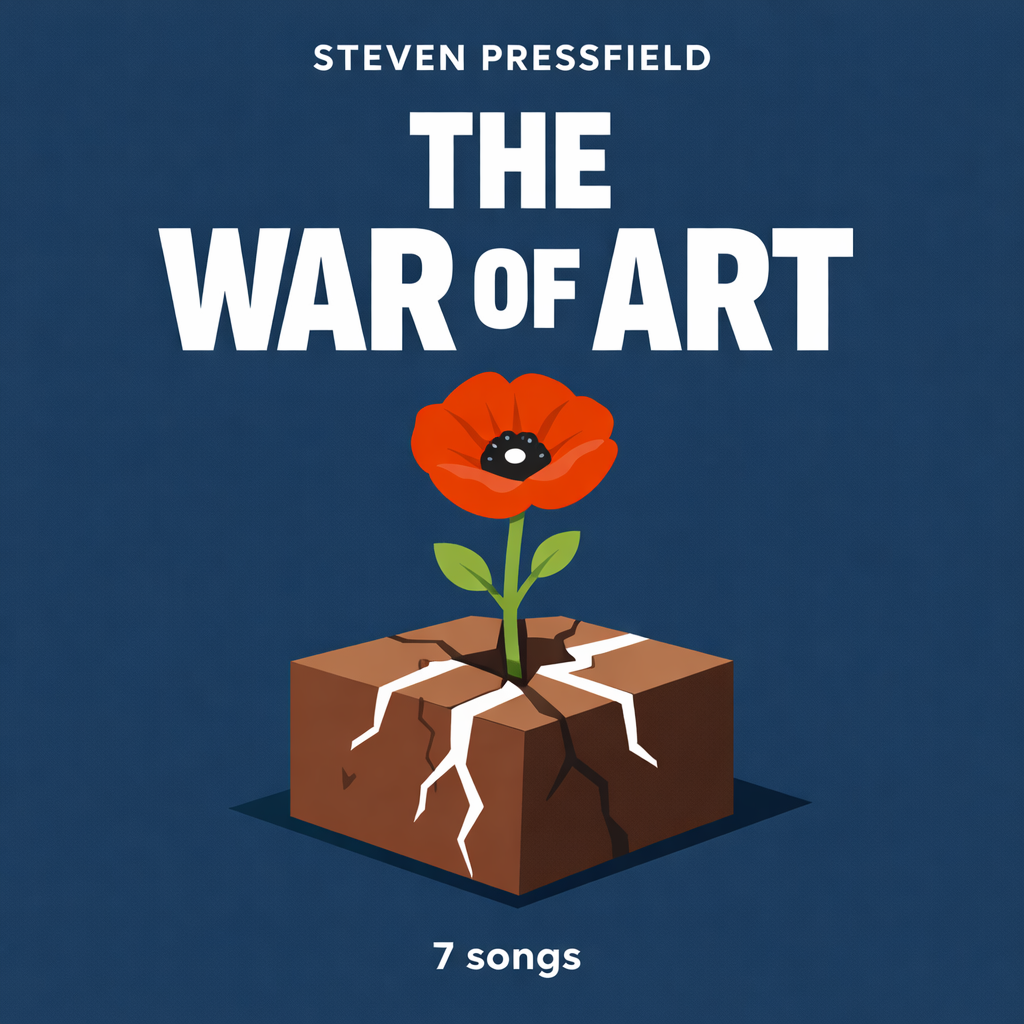
The War Of Art
Steven Pressfield
Album
Key Ideas
1. Resistance
Resistance is the invisible, universal force that stands between you and your creative work. It's not laziness or lack of talent — it's a real, destructive energy that shows up as procrastination, fear, self-doubt, and distraction every time you try to do something meaningful. The more important the work is to your soul's evolution, the stronger Resistance fights against it. Recognizing Resistance as a separate force — not a character flaw — is the first step to defeating it.
2. Turn Pro
Turning pro is the decisive internal shift from treating your work like a hobby to treating it like a calling. The professional shows up every day, regardless of mood, inspiration, or fear. It's not about getting paid — it's about a mindset change. The amateur waits for conditions to be right. The professional sits down and does the work whether conditions are right or not. This single decision changes everything.
3. Do It Scared
Fear is not a signal to stop — it's a compass pointing toward what matters most. Resistance uses fear as its primary weapon, but Pressfield argues that fear and creative calling share the same nerve. The more afraid you are of a particular work or calling, the more certain you can be that you must do it. Courage isn't the absence of fear. It's acting in the face of fear, sitting down at the desk with your hands shaking and doing the work anyway.
4. The Muse Comes After
Inspiration doesn't precede work — it follows it. Pressfield argues that the Muse (the force of creative inspiration) is real, but she only visits those who have already sat down and started. The professional doesn't wait to feel inspired before beginning. The act of showing up and doing the work is what summons the Muse. Inspiration is not a prerequisite for action — it's a consequence of action. The angels lean in when they see you sweating.
5. Territory
Pressfield distinguishes between working in a hierarchy and working in a territory. Hierarchical orientation means doing work for approval, status, or validation from others. Territorial orientation means doing work because the act itself sustains you. Your territory is the domain where you do your work — the canvas, the keyboard, the studio, the field. A territory can only be claimed by work, provides sustenance through the process itself, and gives back exactly what you put in. The professional operates from territory, never hierarchy.
6. The Unlived Life
Pressfield argues that each person has two lives: the life they live and the unlived life within them. Between the two stands Resistance. The unlived life is the novel you never wrote, the business you never started, the song you never sang. It's not hypothetical — it's real, and it haunts you. The stakes of losing to Resistance aren't just disappointment; they're existential. You die with your music still inside you. The cost of not fighting Resistance is the most important life you'll never lead.
7. Sit Down and Start
The entire message of The War of Art distills into one practical action: sit down and start. Not tomorrow, not when conditions are perfect, not after more preparation. Now. The war against Resistance is won in small daily battles — pulling the chair out, opening the file, writing the first terrible sentence. Over time, these daily acts of showing up compound into a body of work, a creative life, and the defeat of Resistance. The secret isn't talent, luck, or inspiration. The secret is starting, and then starting again tomorrow.
Hear the full album on Jamify
7 jams covering the key ideas from The War Of Art. Learn through songs you won't forget.
About Jamify
Jamify turns books, podcasts, and ideas into catchy songs you can't forget. Pick a source, hear the key ideas as music, take a quiz, earn XP, and build your streak. Learning that feels like listening.